Updated: June 2026 • Energy Solutions NW
Do You Need Planning Permission for Solar Panels?
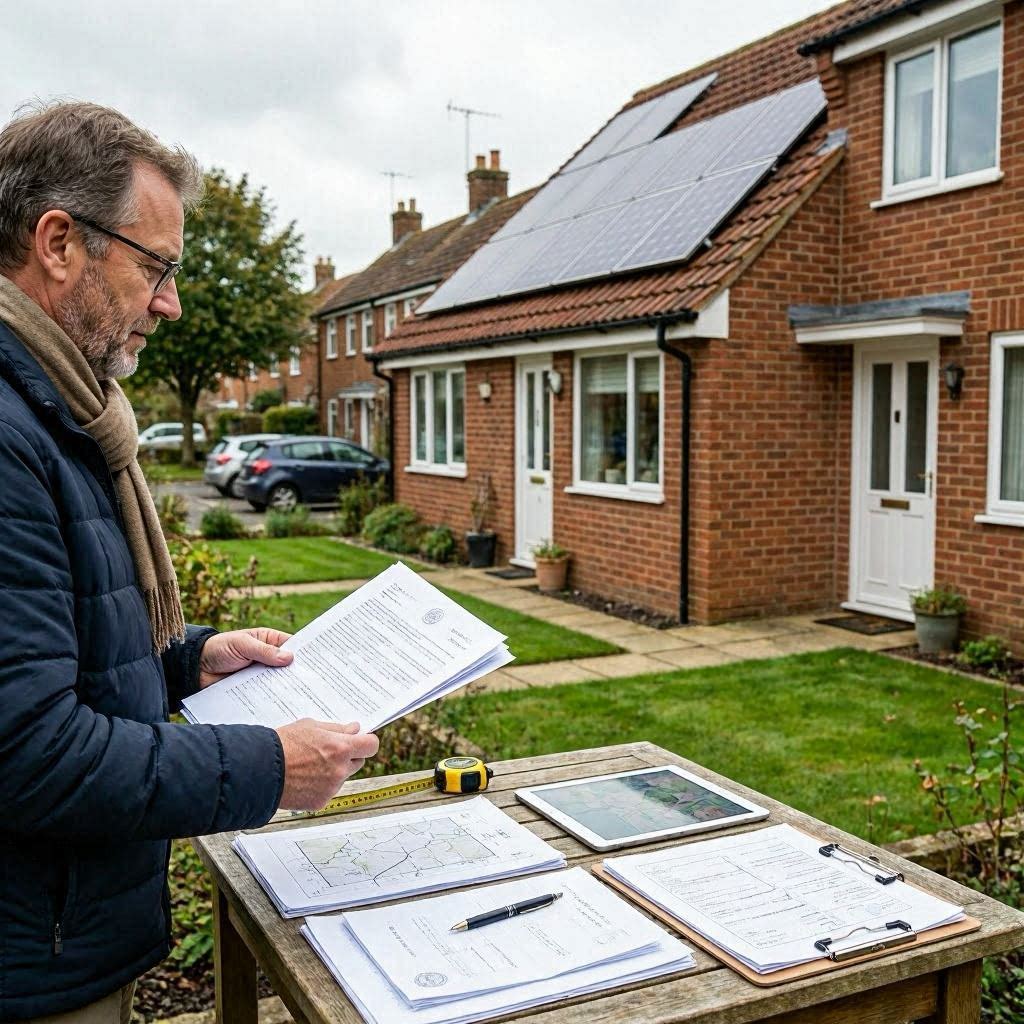
In most cases, no. Roof-mounted solar panels on homes in England are usually classed as permitted development, so no planning application is needed — provided they meet conditions on size and position. Listed buildings and conservation areas are exceptions, and building regulations always apply.
This guide explains solar panel planning permission in the UK — permitted development, listed buildings and conservation areas — for NW homes.
It’s one of the most common worries, but for most homes it’s rarely a barrier. Here’s how the rules generally work.
Planning is one part of the wider journey we set out in our solar panel installation process guide.
Every property is different. Get a free, no-obligation quote tailored to your home — takes 2 minutes.
Do You Need Planning Permission for Solar Panels?
For the majority of homes in England, the answer is no. Most roof-mounted solar installations are classed as permitted development.
That said, rules vary by property and area, so it’s always sensible to confirm your specific situation with your local planning authority before going ahead.
Considering Solar or Battery Storage?
Get a free, no-obligation quote tailored to your property.
What Are Permitted Development Rights?
Permitted development lets you carry out certain work without a full planning application. For rooftop solar in England, the main conditions are:
-
- Not too proud of the roof: panels shouldn’t protrude more than 200mm beyond the roof slope on a pitched roof.
- Not above the ridge: they shouldn’t sit higher than the highest part of the roof (excluding the chimney).
- Sensible siting: panels should be positioned to minimise visual impact where possible.
Flat Roofs and Ground-Mounted Solar
Flat-roof rules were relaxed at the end of 2023. Panels can now sit up to 600mm above a flat roof surface under permitted development, which makes far more flat-roof installs straightforward.
Ground-mounted solar has its own permitted development limits, including a cap on the area covered. Larger ground arrays may need planning permission, so these are worth checking case by case.
Listed Buildings and Conservation Areas
This is where permission is more likely to be needed.
-
- Listed buildings: generally need listed building consent, and often planning permission too. These are judged case by case.
- Conservation areas: extra restrictions can apply, particularly to roof slopes that front a highway.
- National Parks & AONBs: designated land can carry additional conditions.
Worth knowing: if your home is listed or in a conservation area, always check with your local planning authority before installing. Rules differ in Scotland, Wales and Northern Ireland, which have their own planning frameworks.
Building Regulations Still Apply
Whether or not you need planning permission, solar installations must meet building regulations — covering the electrical work and the roof structure.
A professional installer handles this and provides the right certification, so compliance is taken care of as part of the job.
What If You Do Need Permission?
If your property falls outside permitted development, applying for planning permission is usually a straightforward process through your local council.
If you’d like certainty, you can also apply for a Certificate of Lawful Development to confirm your installation is permitted. We can advise on what’s likely needed for your property as part of a free survey.
Why Choose a Professional Installer?
-
- Planning know-how: we flag whether your property is likely to need permission.
- Building regs handled: the electrical work is certified to current UK standards.
- MCS certification: required to access the Smart Export Guarantee for exported electricity.
- Proper design: panels sited to meet the rules and perform well.
What Happens When You Request a Quote?
-
- Submit the form: tell us about your property and any conservation/listed status.
- We review: our team looks at your roof and requirements.
- Free consultation: we discuss your options with no obligation.
- Tailored quote: you receive a plan designed around your specific needs.
Every property is different. Get a free, no-obligation quote tailored to your home — takes 2 minutes.
Related Guides
Frequently Asked Questions
Do I need planning permission for solar panels in the UK?
In most cases, no. Roof-mounted solar on homes in England is usually permitted development, provided it meets conditions on size and position. Listed buildings and conservation areas are exceptions — always check with your local planning authority.
Do solar panels on a flat roof need planning permission?
Usually not. Since the end of 2023, panels up to 600mm above a flat roof surface are generally allowed under permitted development, as long as other conditions are met.
Can I put solar panels on a listed building?
Often only with listed building consent, and these are judged case by case. If your home is listed or in a conservation area, check with your local planning authority before installing.
Do solar panels in a conservation area need planning permission?
Sometimes. In a conservation area, panels on a wall or roof slope facing a highway often need planning permission, while other positions may be permitted development. It’s best to check with your local planning authority before going ahead.
Last updated: June 2026
Disclaimer: This article is for informational purposes only and is not planning or legal advice. Permitted development rules vary by property and region and can change — always confirm your situation with your local planning authority. Energy Solutions NW is part of the Blue Rock Energy network. MCS certified. NICEIC approved.