Updated: June 2026 • Energy Solutions NW
What’s Involved in a Solar Panel Installation?
A solar panel installation follows clear steps: a survey and system design, fitting the panels and inverter (usually over one to three days), then commissioning, grid notification and your MCS certificate. Most of the work is handled for you, including the paperwork.
This guide explains the solar panel installation process — survey, fitting, timescales, commissioning and MCS sign-off — for North West homes.
Knowing what happens — and when — takes the mystery out of going solar. The good news: most of it is handled for you.
If you’re still at the research stage, our guides on solar panel costs and how many panels you need are a good place to start.
Every property is different. Get a free, no-obligation quote tailored to your home — takes 2 minutes.
What’s Involved in a Solar Panel Installation?
From first enquiry to switch-on, a solar install runs through four main stages: survey and design, installation, commissioning, and certification.
A professional installer manages each stage, including the grid notification and paperwork that homeowners often worry about.
Considering Solar or Battery Storage?
Get a free, no-obligation quote tailored to your property.
Step 1: Free Survey and System Design
It starts with a survey of your roof — checking its condition, orientation, shading and structure — alongside a look at your energy use.
From this, your system is designed: the number of panels, where they go, and the inverter and any battery. You get a clear quote before anything goes ahead.
Step 2: Installation Day
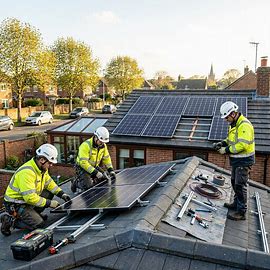
Scaffolding usually goes up first for safe roof access. The team then fits the mounting, panels, inverter and wiring.
Most residential installs take two to three days, though a smaller system can be quicker and adding a battery may add a little time. It’s tidy work and you can usually stay at home throughout.
Step 3: Commissioning, Testing and Grid Notification
Once fitted, the system is tested and commissioned so it runs safely and correctly, and your monitoring is set up.
Your installer also notifies the local network operator (DNO) as required. This is part of connecting a generating system to the grid, and it’s handled for you.
Step 4: Your MCS Certificate and the SEG
After commissioning, you receive your MCS certificate — confirmation the system was installed to the recognised standard.
You’ll need that certificate to register for the Smart Export Guarantee, which pays you for the electricity you export. Keep the paperwork safe.
How Long Does the Whole Process Take?
The installation itself is usually two to three days, but the full journey from enquiry to switch-on takes longer — typically a few weeks.
That allows for the survey, design, scheduling and any lead time on equipment. We’ll give you a realistic timeline when you get your quote.
Why Choose a Professional Installer?
-
- MCS certification: required for your certificate and to access the Smart Export Guarantee.
- Safe roof work: proper scaffolding and trained installers.
- Paperwork handled: grid notification and certification managed for you.
- Grid compliance: the install is notified and tested to current UK standards.
What Happens When You Request a Quote?
-
- Submit the form: tell us about your property and energy use.
- We review: our team looks at your roof and requirements.
- Free consultation: we discuss your options with no obligation.
- Tailored quote: you receive a plan designed around your specific needs.
Every property is different. Get a free, no-obligation quote tailored to your home — takes 2 minutes.
Related Guides
Frequently Asked Questions
How long does it take to install solar panels?
Most residential installations take two to three days on site. The full process from enquiry to switch-on usually takes a few weeks, allowing for the survey, design and scheduling.
Do I need scaffolding for a solar panel installation?
In most cases yes — scaffolding provides safe access to the roof and is usually included as part of the installation. Your installer arranges it.
What is an MCS certificate and why does it matter?
It confirms your system was installed to the recognised standard. You’ll need it to register for the Smart Export Guarantee, so keep it somewhere safe.
Is installing solar panels disruptive?
Most home installs take only 2–3 days and the work is largely outside on the roof, with a short internal connection for the inverter. Scaffolding goes up beforehand, but day-to-day disruption inside the home is usually minimal.
Last updated: June 2026
Disclaimer: This article is for informational purposes only. Energy savings estimates are based on industry averages and may vary depending on your property, energy usage, system size, and electricity tariff. We recommend obtaining a personalised quote for accurate savings estimates. Energy Solutions NW is part of the Blue Rock Energy network. MCS certified. NICEIC approved.