Updated: June 2026 • Energy Solutions NW
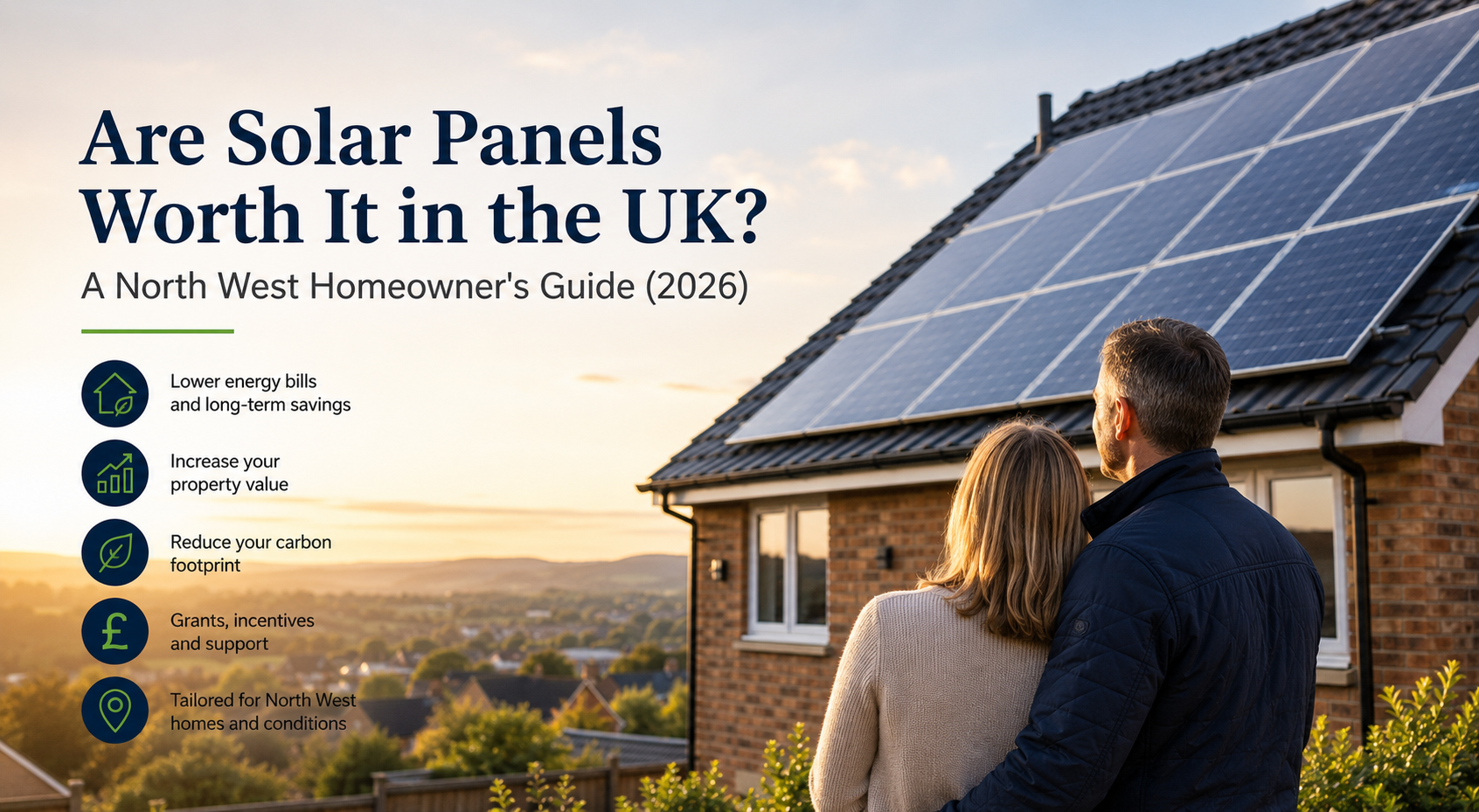
Are Solar Panels Worth It in the UK?
For most UK homeowners, solar panels are worth it. They can help lower your electricity bills, last around 25–30 years, and work across all regions of the country — including the North West. Your savings depend on your roof, your energy use and your system size. Try the Energy Saving Trust solar calculator for an estimate for your property.
This guide covers solar panel costs, the North West climate, off-grid rules, and the most common solar myths for homeowners across the North West.
With energy prices still high, more homeowners across Manchester, Lancashire and Yorkshire are weighing up solar. Below, we answer the questions people ask most — in plain English, without the sales spin.
Every property is different. Get a free, no-obligation quote tailored to your home — takes 2 minutes.
Is It Still Worth Getting Solar Panels in the UK?
For most homeowners, yes — though it depends on your roof, your energy use and your budget.
Even though the old Feed-in Tariff closed to new applicants in 2019, solar still stacks up for two main reasons:
-
- Lower bills: Most homeowners see a worthwhile reduction in their electricity bills, based on current energy prices.
- Export income: The Smart Export Guarantee (SEG) pays you for surplus electricity you send back to the grid, on MCS certified systems.
Typical payback periods range from around 6–10 years, depending on system size and how much energy you use during daylight hours.
Costs vary with system size and your roof, so the best way to know is a personalised estimate, which we include as part of your free quote. There’s also support available, including 0% VAT — see our solar grants & funding guide.
Can You Make Money From Solar Panels?
Yes — you can be paid for the surplus electricity your panels send back to the grid.
This happens through the Smart Export Guarantee (SEG), an Ofgem-backed scheme. Your energy supplier pays you for each unit you export. To qualify:
-
- You need an MCS certified system and a smart meter that records what you export.
- You can choose any SEG supplier — it doesn’t have to be the company that supplies your electricity.
- Rates vary by supplier and change over time, so it pays to compare before you sign up.
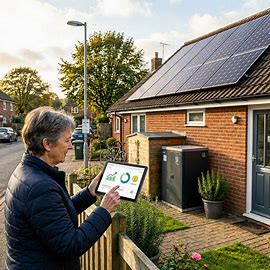
Selling your surplus is optional — you don’t have to sign up at all. Because SEG needs a smart meter, some homeowners would rather not bother; if that’s you, your panels still power your home and you simply use the electricity you generate instead.
Adding a battery changes the sums — you export less but use more of your own power. We cover the full detail, including how to compare rates, in our Smart Export Guarantee guide.
Considering Solar or Battery Storage?
Get a free, no-obligation quote tailored to your property.
Is the North West Good for Solar Panels?
Yes. The UK gets enough daylight to make solar panels worthwhile right across the country — including the North West.
Solar panels run on daylight, not direct sunshine, so they still generate power on overcast days. Homes across Manchester, Lancashire and Yorkshire produce usefully through spring, summer and autumn.
South-facing roofs typically perform best, though east and west-facing roofs can still work well — see our guide to solar panels on different roof types. Output naturally drops in deep winter and overnight, when there’s little or no daylight.
Why a Backup Battery Matters
A backup battery stores the electricity your panels generate during the day, so you can use it in the evening or when the sun isn’t out.
For off-grid homes especially, battery storage is essential — it’s what keeps your home running when the panels aren’t generating. Here’s how it works across a typical day:
-
- During daylight: Your panels power the home and charge the battery at the same time.
- At night or on dull days: Your home draws from the stored battery power instead of the panels.
- Longer low-sun spells: A backup generator can top things up if needed — common on fully off-grid setups.
The takeaway: Battery storage can help you make the most of what your panels generate, day or night. The right size depends on your energy usage and how independent from the grid you want to be — something we assess for your specific property.
Can You Legally Go Off-Grid in the UK?
Yes. There’s no law in the UK that forces your home to stay connected to the national grid.
You’re free to generate and store your own electricity and run your home independently. Plenty of properties across the rural North West already do.
That said, “off-grid” involves more than the electricity supply alone. A few practical and legal points apply before you make the switch:
-
- Planning & building regulations: A home still needs to meet normal planning and building rules, even when it runs entirely on its own power.
- Safe disconnection: If you’re cutting an existing mains supply, your Distribution Network Operator (DNO) or supplier arranges a safe disconnection. A one-off charge usually applies.
- Council tax: Going off-grid doesn’t change your council tax — it’s tied to the property, not the services connected to it.
- Qualified installation: Off-grid electrics must be installed safely. MCS certified installers design and wire the system to current UK standards.
How to Go Off-Grid — A General Overview
Every property is different, but the journey from grid-connected to self-sufficient usually follows the same path:
-
- Assess your energy needs: Work out roughly how much electricity your home uses across the year, including the winter months.
- Size your solar system: Your panels need enough capacity to cover that usage, with headroom for darker days.
- Add battery storage: Batteries store daytime energy for use at night and on dull days — this is the part that makes off-grid living practical in the UK.
- Plan a backup: Many off-grid homes keep a backup generator for long spells of low sun, such as deep mid-winter.
- Arrange disconnection: Speak to your DNO or supplier to safely disconnect your mains supply, if you have one.
- Use a certified installer: Proper design and an MCS certified install keep everything safe and to standard.
Worth knowing: Going fully off-grid is a bigger step than a standard rooftop install. Planning rules, building regulations and safe disconnection all need checking for your specific property and area. We’ll talk through what’s realistic for your home as part of a free assessment.
Can I Legally Install Solar Panels Myself in the UK?
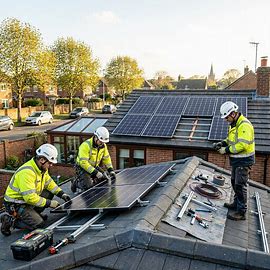
Yes — it’s legal to install solar panels on your own property. There’s no law requiring a certified professional to do the work.
But “legal” isn’t the same as “straightforward.” A DIY install comes with some important catches:
-
- Electrical safety rules: All electrical work must meet Part P of the Building Regulations and UK wiring regulations (BS 7671). This usually needs sign-off by a qualified electrician.
- Grid notification: A grid-connected system normally needs notifying to your DNO under the G98 or G99 rules.
- No SEG payments: Without MCS certification — which most DIY kits don’t have — you generally can’t claim Smart Export Guarantee payments for exported electricity.
- Warranties and insurance: Many manufacturer warranties and home insurance policies require a certified installation.
In short, you can do it yourself, but most homeowners choose an MCS certified installer to stay compliant, keep their warranty and qualify for export payments.
Does a 400W Solar Panel Produce 400W?
Not usually in everyday conditions. The 400W figure is a peak lab rating, not a constant output.
Panels are rated under Standard Test Conditions — bright, controlled lab light at a set temperature. Real-world output is typically lower because of:
-
- Weather and daylight: Cloud cover, time of day and season all change how much light hits the panel.
- Temperature: Panels actually lose a little efficiency when they get very hot.
- Angle and shading: Roof pitch, orientation and any shade from trees or chimneys reduce output.
- System losses: A small amount is lost converting DC to AC and through the wiring.
So a 400W panel gives you a useful way to compare panels — but expect real output to vary through the day and year. Our guide to types of solar panels explains how the options differ.
What Appliances Cannot Be Used With Solar Power?
In truth, any appliance can run on solar power — as long as your system is sized to handle it.
The real issue is high-demand appliances that draw a lot of power at once. On a small system or a fully off-grid setup, these can be a challenge:
-
- Electric showers and immersion heaters: These pull a large, sudden load.
- Ovens, hobs and kettles: High wattage, often used at peak family times.
- Tumble dryers and EV chargers: Run for long periods at high power.
With a grid connection, your supply tops up whatever the panels can’t cover. Off-grid, a correctly sized battery and inverter — and sometimes a backup generator — are what let these appliances run reliably.
What Is the 33% Rule in Solar Panels?
In a UK home setting, the 33% rule usually refers to inverter oversizing.
It’s a design guideline, not a law. It suggests you can pair your inverter with around 33% more panel capacity than its rated output.
For example, a 5kW inverter might be paired with up to roughly 6.65kW of panels. Because panels rarely hit their full rating at once, this helps the inverter run closer to its sweet spot and capture more energy across the year.
What Is the 20% Rule for Solar Panels?
The 20% rule is a sizing rule of thumb — not an official requirement. For a fuller picture, see how many solar panels you need.
It suggests sizing your system to generate around 20% more energy than your home typically uses. That buffer helps cover everyday losses, such as:
-
- Cloudy days and shorter winter daylight that reduce generation.
- Dirt, dust and bird droppings that build up on the panels over time.
- System losses from converting and moving the power around your home.
The right buffer depends on your usage, your roof and whether you have battery storage — so treat it as a starting point, not a fixed number.
What Are the Downsides of Solar Panels in the UK?
Solar isn’t right for every home, and it’s fair to weigh the drawbacks alongside the benefits:
-
- Upfront cost: There’s an initial outlay, and the system takes a number of years to pay back.
- Weather-dependent: Output rises and falls with daylight, so generation is lower in winter.
- Evening use: Without a battery, surplus daytime energy is exported rather than used after dark.
- Roof suitability: Heavy shading, a small roof or certain orientations can limit how much you generate.
- Some maintenance: Panels need occasional cleaning, and inverters are typically replaced at some point during the system’s life.
For most homes the benefits outweigh these points — but a proper assessment of your roof and usage is the only way to know for sure.
Why Are People Getting Rid of Their Solar Panels?
When you see panels coming off a roof, it’s rarely because solar has failed. It’s usually for practical reasons:
-
- Roof work: The most common reason. Panels are taken down for a roof repair or replacement, then reinstalled afterwards.
- Upgrading: Older panels are removed to fit newer, more efficient models that produce more from the same roof space.
- Moving home: Some older “rent-a-roof” deals from the early Feed-in Tariff era can complicate a house sale.
- End of life: After 25–30 years, an ageing system may be due for replacement.
- Poor original install: A small number of early systems were badly sited or fitted, leading to disappointing output.
In most cases, “getting rid” really means “upgrading” — homeowners staying with solar, just with better technology.
Why Choose a Professional Installer?
A professional, accredited install protects both your home and your investment:
-
- MCS certification: Required to access the Smart Export Guarantee for your exported electricity.
- Warranty protection: Certified installations keep manufacturer and workmanship warranties valid.
- Proper system design: Your roof, shading and usage are assessed so the system is sized correctly.
- Grid compliance: Connections are notified and tested to current UK standards.
What Happens When You Request a Quote?
-
- Submit the form: Tell us a few details about your home and what you’re looking for.
- We review: Our team looks at your property and energy needs.
- Free consultation: We discuss your options with no obligation.
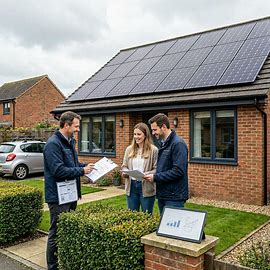
- Tailored quote: You receive a quote designed around your specific energy needs.
Every property is different. Get a free, no-obligation quote tailored to your home — takes 2 minutes.
Related Guides
Frequently Asked Questions
How long do solar panels last?
Solar panels typically last around 25–30 years. Output gradually reduces over time, but many systems still perform well beyond their warranty period.
Do solar panels work in winter in the UK?
Yes. Solar panels run on daylight rather than direct sunshine, so they still generate in winter, though output is lower than in summer. Battery storage helps you use more of what you generate.
Do I need planning permission for solar panels in the UK?
Most rooftop solar installations fall under permitted development, so planning permission usually isn’t needed. Listed buildings and conservation areas can be exceptions — always check with your local council.
Last updated: June 2026
Disclaimer: This article is for informational purposes only. Energy savings estimates are based on industry averages and may vary depending on your property, energy usage, system size, and electricity tariff. We recommend obtaining a personalised quote for accurate savings estimates. Energy Solutions NW is part of the Blue Rock Energy network. MCS certified. NICEIC approved.