Updated: June 2026 • Energy Solutions NW
Replacing Old or Underperforming Panels
Solar panels degrade slowly — typically losing around 0.5% of output a year — so most last 25 to 30 years. You may replace one that’s physically damaged or badly underperforming, or upgrade an ageing array to higher-efficiency panels that generate more power from the same roof space.
This guide explains replacing old or underperforming panels — degradation, warning signs, upgrading to higher-efficiency models — for NW homeowners.
Panels are the most durable part of a solar system, so wholesale replacement is rare — but the odd panel can fail or get damaged.
If your output has dropped, it’s worth diagnosing the cause first — our solar maintenance guide covers this.
💡 Panels not performing like they used to? Every system is different. Get a free, no-obligation quote tailored to your home — takes 2 minutes.
Replacing Old or Underperforming Panels
Solar panels are built to last decades, so replacing them isn’t something most owners need to do often.
When it does come up, it’s usually a single damaged panel, or the choice to upgrade an old array to modern, higher-output panels. This guide covers both.
Considering Solar or Battery Storage?
Get a free, no-obligation quote tailored to your property.
Do Solar Panels Wear Out?
They degrade, but very slowly. Most panels lose around 0.5% of their output per year, so after 25 years they still typically produce 85–90% of their original power.
That’s why panels are usually the last part of a system to need attention — the inverter and other components tend to go first.
Signs a Panel Needs Replacing
-
- Physical damage: cracked glass, water ingress or visible burn marks.
- Delamination: cloudy patches or bubbling where layers separate.
- A sharp output drop: one panel or string well below the rest.
- Hotspots: areas that overheat, often flagged during a service.
A gradual, even decline across all panels is normal ageing — not a fault.
Replace Some or All?
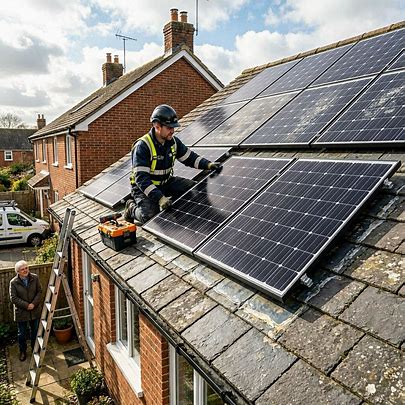
If just one panel has failed, replacing that single panel is often the simplest fix — though matching it to the others matters.
If a whole array is old and underperforming, a full upgrade to modern panels can make more sense, especially if you want more power from the same roof.
Upgrading to Higher-Efficiency Panels
Modern panels are far more powerful than those from a decade ago, so newer models generate more electricity from the same space.
That makes an upgrade appealing if your roof space is limited. Our guide to types of solar panels explains how efficiency varies between models.
Matching New Panels to Your System
New and old panels don’t always work well together on the same string, as mismatched panels can drag each other’s output down.
A good installer will configure replacements carefully — and check your inverter suits the new panels. See adding more panels to an existing system for the related considerations.
Why Choose a Professional Installer?
-
- Correct diagnosis: telling normal ageing apart from a genuine fault.
- Proper matching: replacements configured to work with your existing panels.
- MCS certification: keeping your system and export arrangements in order.
- Safe installation: working at height and electrically to current UK standards.
What Happens When You Request a Quote?
-
- Submit the form: tell us about your system and the issue.
- We review: our team looks at your setup and requirements.
- Free consultation: we discuss your options with no obligation.
- Tailored quote: you receive a solution designed around your specific needs.
💡 Ready to sort your panels? Every system is different. Get a free, no-obligation quote tailored to your home — takes 2 minutes.
Related Guides
Frequently Asked Questions
How long do solar panels last before they need replacing?
Most solar panels last 25 to 30 years. They lose only around 0.5% of output a year, so they typically still produce 85–90% of their original power after 25 years.
Can I replace just one solar panel?
Yes. If a single panel is damaged or faulty, it can usually be replaced on its own — though it should be matched carefully to the others so it doesn’t drag the string’s output down.
Is it worth upgrading old panels to newer ones?
It can be, especially if your roof space is limited. Modern panels are more powerful than older models, so replacing an ageing array can generate more electricity from the same area.
Will newer panels work with my old system?
Usually, but not always directly. Newer, higher-output panels may need an inverter check or separate string to pair safely with older equipment. An installer can confirm what’s compatible before any work goes ahead.
Last updated: June 2026
Disclaimer: This article is for informational purposes only. Energy savings estimates are based on industry averages and may vary depending on your property, energy usage, system size, and electricity tariff. We recommend obtaining a personalised quote for accurate savings estimates. Energy Solutions NW is part of the Blue Rock Energy network. MCS certified. NICEIC approved.