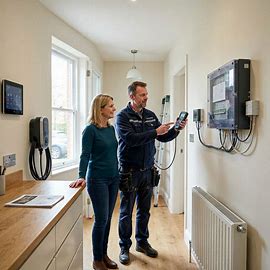
What Is a Smart Home Energy System?
A smart home energy system links your meter, solar, battery, EV charger and appliances so they can be monitored and controlled together. A management layer decides when to store, use, import or export electricity — automatically shifting usage to cut your costs.💡 Want your energy kit working as one? Every home is different. Get a free, no-obligation quote tailored to your home — takes 2 minutes.
What It Actually Is
At its heart, a smart home energy system is a layer of intelligence that sits above your energy kit. Rather than your solar, battery, EV charger and tariff all working separately, the system connects them and makes decisions across the lot — when to store energy, when to use it, when to import from the grid, and when to export. You’ll sometimes see it called a Home Energy Management System, or HEMS. The aim is the same: get the most value from what you generate and the lowest-cost electricity from the grid.Considering Solar or Battery Storage?
Get a free, no-obligation quote tailored to your property.
The Parts of the System
A smart energy setup can pull together several pieces:-
- Smart meter: measures electricity in and out — the basis for accurate billing, export payments and time-of-use tariffs.
- Solar panels: generate electricity during the day.
- Battery storage: stores surplus solar or cheap off-peak power.
- EV charger: a major load that’s worth scheduling smartly.
- Smart appliances and plugs: let you shift usage to cheaper times.
How It Saves Money
The savings come from automatically doing the sensible thing at the right moment — something that’s tedious to do manually.-
- Maximising self-consumption: using your own solar rather than exporting it cheaply.
- Load-shifting: running the battery, car or appliances when electricity is cheaper.
- Smart tariff use: charging the battery on cheap overnight rates to use during expensive peak hours.
- Avoiding peak import: drawing from stored power when grid prices spike.
💡 Curious what you’d save? Every home is different. Get a free, no-obligation quote tailored to your home — takes 2 minutes.
Monitoring and Control
One of the most useful everyday features is simply being able to see what’s going on. Most systems come with an app that shows generation, storage, usage and export in real time — often broken down by appliance or circuit. That visibility alone often helps people cut waste they didn’t know they had. From the same app you can usually set preferences — for example, keeping a battery reserve for power cuts, or prioritising certain devices.Do You Need Solar to Benefit?
No — and this surprises people. While a smart system shines when it’s managing solar and a battery together, even a home without panels can benefit. A battery on a time-of-use tariff can be charged cheaply overnight and used during peak hours, with the system handling the timing. That said, the biggest gains come when solar, battery and smart control work together. Our whole-home energy system guide looks at the full combination.Where to Start
You don’t have to do everything at once. A sensible first step is understanding your current usage — a smart meter and a monitoring app reveal your peak hours and where energy goes. From there, you can add a battery, smarter controls or solar in a way that fits your priorities, whether that’s saving money, resilience or lower carbon. Designing it with the end picture in mind — even if you build up over time — avoids buying parts that don’t work together.Why Choose a Professional Installer?
-
- Joined-up design: components chosen to work together as one system.
- Correct setup: controls and tariffs configured to actually save money.
- Future-ready: a system that can grow with solar, battery or EV later.
- NICEIC approved: work to recognised standards.
What Happens When You Request a Quote?
-
- Submit the form: tell us what you have and what you’d like to achieve.
- We review: our team looks at your setup and requirements.
- Free consultation: we discuss your options with no obligation.
- Tailored quote: you receive a solution designed around your specific needs.
💡 Ready to make your home smarter? Every home is different. Get a free, no-obligation quote tailored to your home — takes 2 minutes.
Related Guides
Frequently Asked Questions
What is a home energy management system (HEMS)?
It’s an intelligence layer that connects your meter, solar, battery, EV charger and appliances, then decides when to store, use, import or export electricity. The goal is to maximise your own generation and use the lowest-cost grid power.Do I need solar for a smart energy system?
No. The biggest gains come from managing solar and a battery together, but even a home without panels can benefit — for example, charging a battery cheaply overnight on a time-of-use tariff and using it during peak hours.How does a smart energy system save money?
By automating sensible decisions: maximising use of your own solar, shifting loads to cheaper times, charging a battery on off-peak rates, and avoiding expensive peak imports. How much you save depends on your setup, usage and tariff.What’s the simplest way to start?
Understanding your usage first. A smart meter and a monitoring app show your peak hours and where energy goes, so you can add a battery, smart controls or solar in the order that suits your priorities and budget. Last updated: June 2026Disclaimer: This article is for informational purposes only. Energy savings estimates are based on industry averages and may vary depending on your property, energy usage, system size, and electricity tariff. We recommend obtaining a personalised quote for accurate savings estimates. Energy Solutions NW is part of the Blue Rock Energy network. MCS certified. NICEIC approved.