Updated: June 2026 • Energy Solutions NW
How Much Does It Cost to Install a Home EV Charger?
A home EV charger typically costs around £800 to £1,200 fully installed in 2026, including the unit, cabling and commissioning by a qualified electrician. Grants of up to £500 are available for some households, such as renters and flat owners with off-street parking.
This guide covers home EV charger installation in the UK — costs, the £500 grant, charger types and charging from solar — for North West homes.
A dedicated home charger is faster and safer than using a three-pin plug, and it turns charging into something you barely think about.
EV charging is one of several home upgrades we cover in our home electrical upgrades guide.
Every property is different. Get a free, no-obligation quote tailored to your home — takes 2 minutes.
How Much Does Home EV Charger Installation Cost?
In 2026, a typical home EV charger costs around £800 to £1,200 fully installed.
That usually covers the charger unit, mounting, cabling back to your fuse box (consumer unit) and commissioning by a qualified electrician.
The final price depends on the charger you choose and how far the cabling has to run from your consumer unit to the parking space.
Considering Solar or Battery Storage?
Get a free, no-obligation quote tailored to your property.
Is There a Grant for Home EV Chargers?
There is, but not for everyone. The EV chargepoint grant offers up to £500 per socket (or 75% of the cost, whichever is lower) towards a home charger.
Who qualifies: the grant is mainly for renters, flat owners and landlords with off-street parking, plus separate schemes for homes with on-street parking. Owner-occupiers of a house with their own driveway are generally not eligible. The grant must be claimed through an approved installer, and the current scheme runs until March 2027.
Eligibility rules change, so it’s worth checking your situation before booking. We can talk you through whether a grant applies to you.
Which EV Charger Is Right for You?
-
- 7kW (most homes): the standard choice, running off a normal single-phase supply. Fully charges most cars overnight.
- 22kW: faster, but needs a three-phase supply that most homes don’t have.
- Tethered vs untethered: tethered has a fixed cable (convenient); untethered uses your own cable (tidier, more flexible).
- Smart charging: all new home chargers must be smart by law — letting you schedule cheap overnight charging.
What’s Involved in Installation?
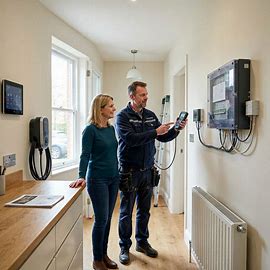
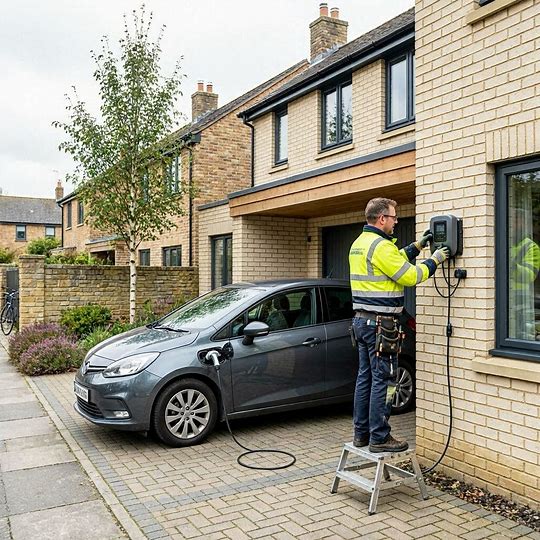
Most home charger installs are completed in a few hours by a qualified electrician.
The charger is wired back to your consumer unit, with the right protection fitted, then tested and commissioned. Where your fuse box is older, it may need attention first — something we’d flag at survey.
Charging Your EV From Solar
If you have solar panels, you can charge your car from your own electricity instead of paying for grid power — especially on sunny days.
Pairing an EV charger with solar, and ideally battery storage, makes the most of what you generate. If you’re weighing up panels too, start with our guide on whether solar is worth it in the UK.
Cutting Charging Costs With an EV Tariff
A smart charger lets you schedule charging for off-peak hours. Many EV-specific tariffs offer much cheaper overnight rates than standard electricity prices.
Charging overnight on a dedicated EV tariff is where most of the running-cost savings come from. The right tariff often saves more over a year than the install grant would.
Why Choose a Professional Installer?
-
- NICEIC approved: the work is carried out to recognised UK standards.
- Safe & compliant: installed to the UK wiring regulations (BS 7671) with the right protection.
- Grant-ready: if you’re eligible, an approved installer handles the claim.
- Joined-up advice: we can connect your charger with solar and battery plans.
What Happens When You Request a Quote?
-
- Submit the form: tell us about your property, parking and car.
- We review: our team looks at your setup and any grant eligibility.
- Free consultation: we discuss charger options with no obligation.
- Tailored quote: you receive a price designed around your specific needs.
Every property is different. Get a free, no-obligation quote tailored to your home — takes 2 minutes.
Related Guides
Frequently Asked Questions
How much does it cost to install a home EV charger?
In 2026, a home EV charger typically costs around £800 to £1,200 fully installed, covering the unit, cabling to your fuse box and commissioning by a qualified electrician.
Can I still get a grant for a home EV charger?
The EV chargepoint grant offers up to £500 per socket, mainly for renters, flat owners, landlords and homes with on-street parking. Owner-occupiers with a private driveway are generally not eligible. The scheme runs until March 2027.
Do I need a 7kW or 22kW charger?
Most homes use a 7kW charger, which runs off a standard single-phase supply and fully charges most cars overnight. A 22kW charger needs a three-phase supply that most homes don’t have.
Last updated: June 2026
Disclaimer: This article is for informational purposes only. Energy savings estimates are based on industry averages and may vary depending on your property, energy usage, system size, and electricity tariff. We recommend obtaining a personalised quote for accurate savings estimates. Energy Solutions NW is part of the Blue Rock Energy network. MCS certified. NICEIC approved.