Updated: June 2026 • Energy Solutions NW
Hybrid vs Fully Off-Grid Systems
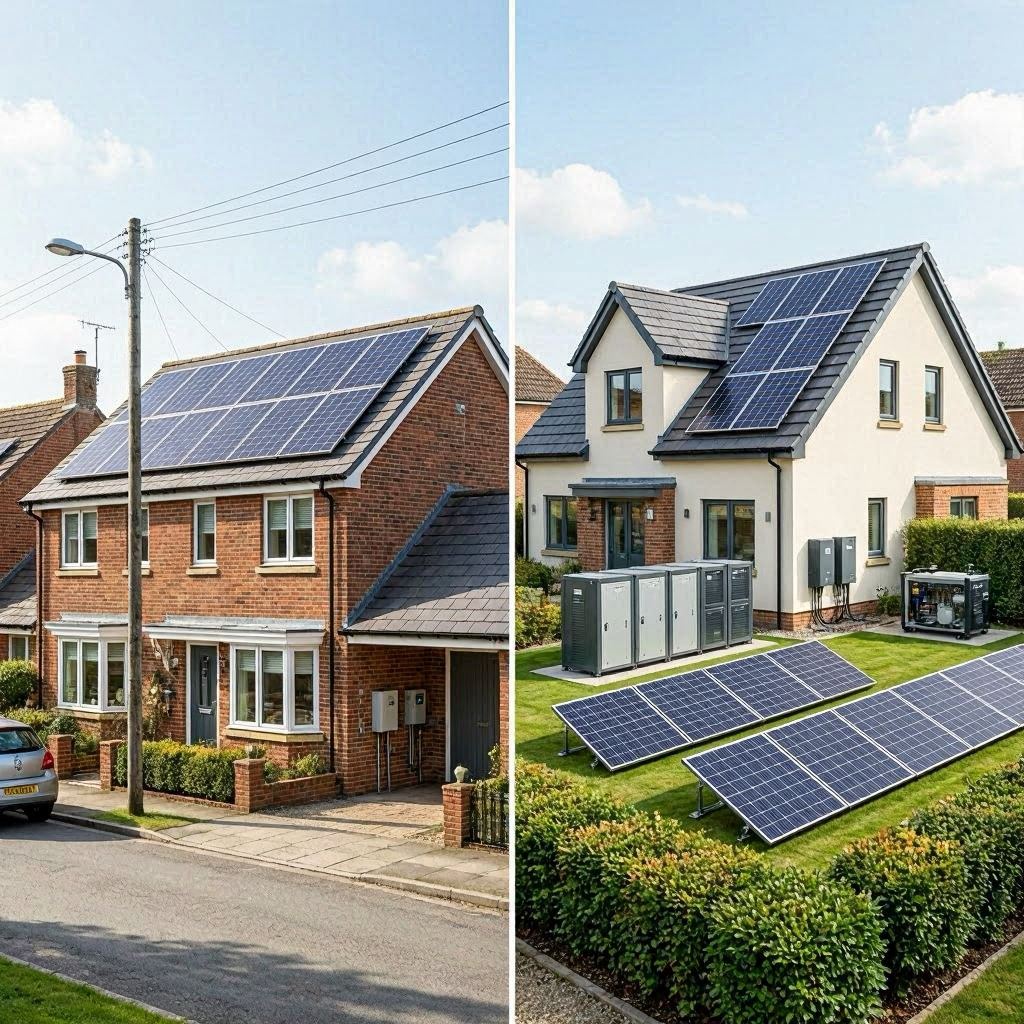
A fully off-grid system has no grid connection and supplies all its own power from solar, battery and a generator. A hybrid system stays connected to the grid but adds battery storage, using the grid as backup. Hybrid suits most homes; fully off-grid suits remote properties.
This guide compares hybrid and fully off-grid solar systems in the UK — how each works, pros and cons, and which suits your home — for NW homeowners.
Most people picturing “off-grid” actually want the resilience of a hybrid system — the two are easy to confuse.
Both build on the storage basics in our off-grid solar guide.
💡 Not sure which setup suits you? Every property is different. Get a free, no-obligation quote tailored to your home — takes 2 minutes.
Hybrid vs Fully Off-Grid: What’s the Difference?
The key difference is the grid connection. A fully off-grid system has none; a hybrid system keeps it.
That single choice changes how the system is designed, how much it costs, and how much independence you get.
Considering Solar or Battery Storage?
Get a free, no-obligation quote tailored to your property.
What Is a Fully Off-Grid System?
A fully off-grid system is completely independent of the mains. It generates, stores and supplies all your electricity itself.
It needs a larger solar array, plenty of battery storage and usually a backup generator, because there’s no grid to fall back on. It’s the right answer where a connection is impractical.
What Is a Hybrid System?
A hybrid system is grid-connected solar with battery storage. You use your own solar and stored power first, and draw from the grid when needed.
Many hybrid setups can also keep key circuits running during a power cut. Our guide on solar batteries in a power cut explains how that backup works.
Pros and Cons of Each
-
- Fully off-grid — pros: total independence; no grid bills or connection needed.
- Fully off-grid — cons: larger, more expensive system; relies on careful sizing and a generator.
- Hybrid — pros: smaller and cheaper; grid as a safety net; can still earn export payments.
- Hybrid — cons: still connected to (and partly reliant on) the grid.
Which Is Right for You?
For most homes with a grid connection, a hybrid system gives the best balance — more self-sufficiency and backup, without the cost of going fully independent.
Fully off-grid makes most sense for remote properties where a connection is distant or very expensive.
Can You Move from Hybrid to Off-Grid Later?
Often yes. A well-designed hybrid system can be a stepping stone, with more panels, battery and a generator added over time.
If full independence is a long-term goal, it’s worth designing with that in mind from the start. We can plan a system that leaves room to grow.
Why Choose a Professional Installer?
-
- Right design: hybrid or off-grid, sized to your needs and goals.
- MCS certification: required to access the Smart Export Guarantee on hybrid systems.
- Safe installation: electrical work to current UK standards, with certification.
- Room to grow: systems planned so you can expand later if you want.
What Happens When You Request a Quote?
-
- Submit the form: tell us about your property and energy use.
- We review: our team looks at your site and requirements.
- Free consultation: we discuss hybrid vs off-grid with no obligation.
- Tailored quote: you receive a system designed around your specific needs.
💡 Ready to choose the right system? Every property is different. Get a free, no-obligation quote tailored to your home — takes 2 minutes.
Related Guides
Frequently Asked Questions
What’s the difference between hybrid and off-grid solar?
A fully off-grid system has no grid connection and supplies all its own power. A hybrid system stays connected to the grid but adds battery storage, using the grid as a backup.
Is a hybrid or off-grid system better?
For most homes with a grid connection, hybrid gives the best balance of self-sufficiency and cost. Fully off-grid makes most sense for remote properties where connecting to the grid is impractical.
Can I upgrade a hybrid system to fully off-grid?
Often yes. A well-designed hybrid system can be expanded with more panels, battery and a generator over time. It helps to design with that goal in mind from the start.
Is it worth going fully off-grid in the UK?
For most UK homes with a grid connection, a hybrid system gives better value — full off-grid costs considerably more and needs oversizing plus a generator for winter. Going fully off-grid usually makes sense only where a new grid connection would be very expensive.
Last updated: June 2026
Disclaimer: This article is for informational purposes only. Energy savings estimates are based on industry averages and may vary depending on your property, energy usage, system size, and electricity tariff. We recommend obtaining a personalised quote for accurate savings estimates. Energy Solutions NW is part of the Blue Rock Energy network. MCS certified. NICEIC approved.