Updated: June 2026 • Energy Solutions NW
Off-Grid Battery Storage & Backup Generators
Off-grid homes rely on a large battery to store solar power for evenings and dull days, with a backup generator covering extended low-sun spells — especially in winter. The two work together: the battery handles day-to-day use, and the generator tops it up when needed.
This guide explains off-grid battery storage and backup generators in the UK — how they work together, sizing and running costs — for NW homes.
Storage and backup are the heart of any off-grid setup — between them, they keep the lights on when the sun doesn’t shine.
It’s a core part of going off-grid, so it’s worth reading alongside our off-grid solar guide.
Every property is different. Get a free, no-obligation quote tailored to your home — takes 2 minutes.
Off-Grid Battery Storage & Backup Generators
An off-grid home has no grid to fall back on, so it needs two layers of security: a large battery, and a backup generator for the rare times the battery runs low.
Together they give you reliable power all year — the battery doing the everyday work, the generator stepping in only when needed.
Considering Solar or Battery Storage?
Get a free, no-obligation quote tailored to your property.
Why Off-Grid Needs Large Battery Storage
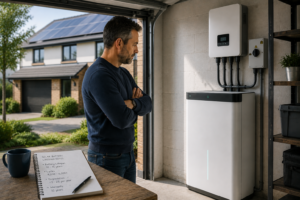
The battery is the backbone of an off-grid system. It stores daytime solar so you can use it in the evening and overnight, and carries you through dull days.
Off-grid battery banks are much larger than grid-tied ones and almost always use lithium iron phosphate (LFP) for its long life. Our guide on battery types and brands explains the chemistry.
How Backup Generators Fit In
A backup generator covers the extended low-sun spells — typically mid-winter — when solar and battery alone might not keep up.
Generators commonly run on diesel, petrol or LPG. Rather than powering the home directly all the time, they’re usually used to recharge the battery when it gets low.
How Storage and Backup Work Together
In normal use, your home runs from solar and the battery. The generator stays off.
When a long dull spell drains the battery below a set level, the generator kicks in to recharge it, then switches off again. This keeps generator use — and fuel costs — to a minimum.
Sizing the Storage and Backup Combo
The trick is balance. A bigger battery means less generator use but higher upfront cost; a smaller battery leans more on the generator and fuel.
Most off-grid homes aim for several days of battery autonomy with a generator for the rest. See what size off-grid system you need for how this is worked out.
Costs and Running a Generator
Battery storage is usually the biggest single cost in an off-grid system, and the generator adds both an upfront and an ongoing fuel cost.
A well-balanced design keeps fuel use low. Our off-grid solar costs guide breaks down where the money goes.
Why Choose a Professional Installer?
-
- Balanced design: battery and generator sized to work together economically.
- Safe installation: off-grid electrical work to current UK standards, with certification.
- Automatic switching: systems set up so the generator only runs when needed.
- Year-round reliability: built to keep your home powered through winter.
What Happens When You Request a Quote?
-
- Submit the form: tell us about your property and energy use.
- We review: our team looks at your site and requirements.
- Free consultation: we discuss your options with no obligation.
- Tailored quote: you receive a system designed around your specific needs.
Every property is different. Get a free, no-obligation quote tailored to your home — takes 2 minutes.
Related Guides
Frequently Asked Questions
Do off-grid systems need a backup generator?
Most do. A generator covers extended low-sun spells, particularly in winter, so you’re not relying on solar and battery alone during the darkest weeks. It also lets you size the battery more economically.
How does a generator work with an off-grid battery?
The home normally runs from solar and the battery. When the battery drops below a set level, the generator starts, recharges it, then switches off — keeping generator use and fuel costs to a minimum.
What kind of battery is used for off-grid storage?
Off-grid systems almost always use lithium iron phosphate (LFP) batteries for their long cycle life and safety, in much larger banks than a typical grid-tied home.
How often will I need to run the generator?
With a well-sized solar and battery system, surprisingly little — many off-grid UK homes run their generator only on a handful of the darkest winter days each year. The better your solar and storage sizing, the less the generator is needed.
Last updated: June 2026
Disclaimer: This article is for informational purposes only. Energy savings estimates are based on industry averages and may vary depending on your property, energy usage, system size, and electricity tariff. We recommend obtaining a personalised quote for accurate savings estimates. Energy Solutions NW is part of the Blue Rock Energy network. MCS certified. NICEIC approved.